One robot, many aircraft
A single Door Trainer simulates galley doors, over-wing exits and cockpit hatches. Adding an aircraft type afterwards means customising new drills, not buying new hardware.
Robotic force feedback
Cabin crew deserve more than a static mockup. The Door Trainer pairs true physical resistance with immersive VR to deliver realistic aircraft door training at your own base.
It installs in 6 m². Inside VR we build a digital twin of your galley or over-wing exit and write every drill against your SOPs. Hand tracking means no controllers: trainees operate the handle with their hands while the robot reproduces each handle position, so they feel the real weight and resistance of the door.
Purpose-built for mandatory onboarding and recurrent door training, it supports multiple aircraft types and scenarios in a single installation.
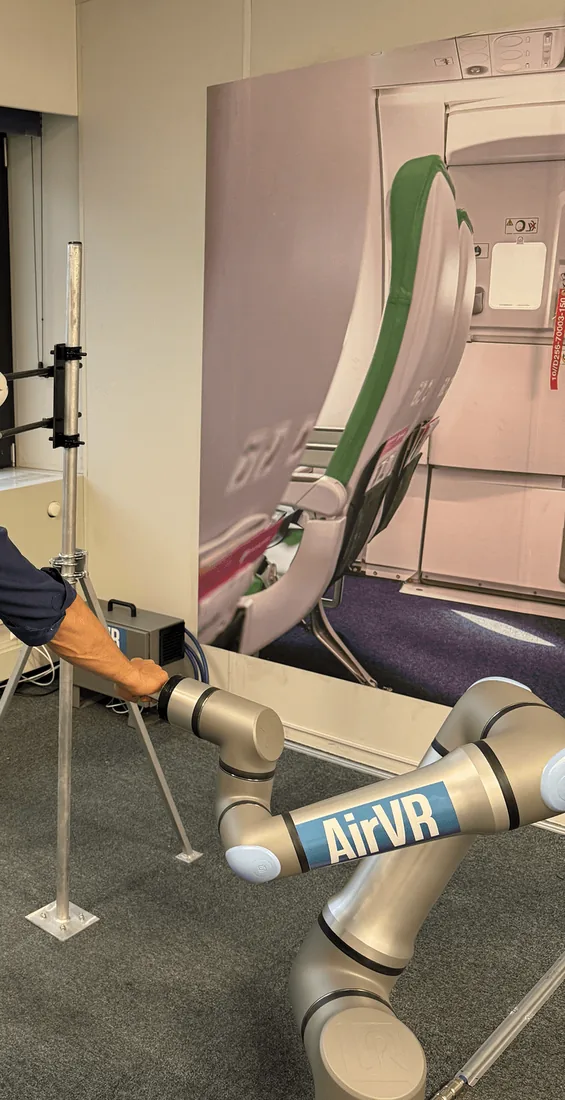
A single Door Trainer simulates galley doors, over-wing exits and cockpit hatches. Adding an aircraft type afterwards means customising new drills, not buying new hardware.
External fire, door jamming, power-assist failure and more — run with or without tutorials and guidance hints, matched to each trainee’s experience.
VR handles the repetitive instruction and correction so instructors spend their time on judgement, communication and assessment.
Training data is recorded automatically and compiled into reports that show common errors and skill development over time.
Add smoke, fire, water and ambient noise to move a drill from procedure rehearsal to a lifelike, high-pressure environment.
Six square metres at your base, available every day, instead of competing for an aircraft or a full-size mockup.
What ships
We recommend adding a large LCD screen so waiting trainees can watch the session. Software updates are deployed by AirVR to the headset and control PC.
Get started
Tell us the fleet and the syllabus. We will show you the drills running on your aircraft type, online or at our facility in Copenhagen.